Work Camp 27 HV

Work Camp 27 HV |
|
 |
| Rough plan of POW camp drawn by Dvr R.M.Lock |
Location: Zeltweg
Type of work: Airfield construction
Man of Confidence: Unknown
Number of Men: 440 approx.
Forename |
Surname |
Rank |
Unit |
POW |
Comments |
| Clifford Charles | Allardice | Pte | 1 Aust. Corp. H.Q. | 3972 | Australia; also 10030/GW, 11096/GW |
| Ralph | Anderson | Spr | RE | 2687 | |
| William John | Brotchie | Pte | 2/6 Inf. Bn. | 3814 | Australia; also 10105/GW, 10511/GW |
| W. | Bunnett | Sgt | RAC | 3086 | |
| Thomas Edward | Casley | Pte | 2/11 Inf. Bn. | 3317 | Australia; also 924/GW |
| G. | Johnston | Gnr | NZ Art. | 3996 | New Zealand |
| Reginald Moore | Lock | Dvr | RASC | 3026 | Bournemouth; also 10105/GW, 352/GW, 13048/L, 10029/GW, 955/GW |
| Clement Percy | Moore | Pte | 3474 | New Zealand | |
| Donald | Munns | Dvr | RASC | 2636 | |
| John | Paterson | Dvr | RASC | 2859 | Kirkcaldy, Scotland; also 11010/GW |
| William Robert Stanley | Thorpe | Pte | 2/6 Inf. Bn. | 3813 | Victoria, Australia; also 10105/GW, 10511/GW, 296/L |
 |
 |
 |
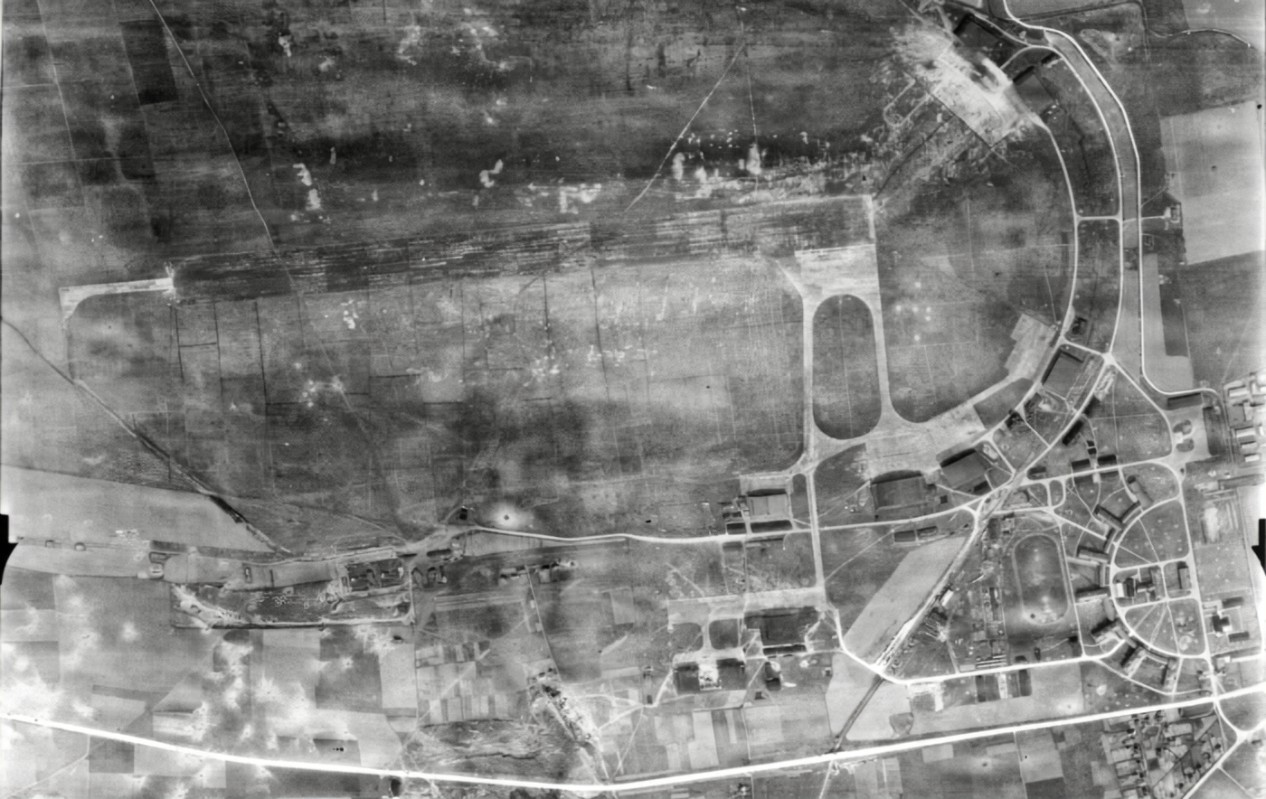
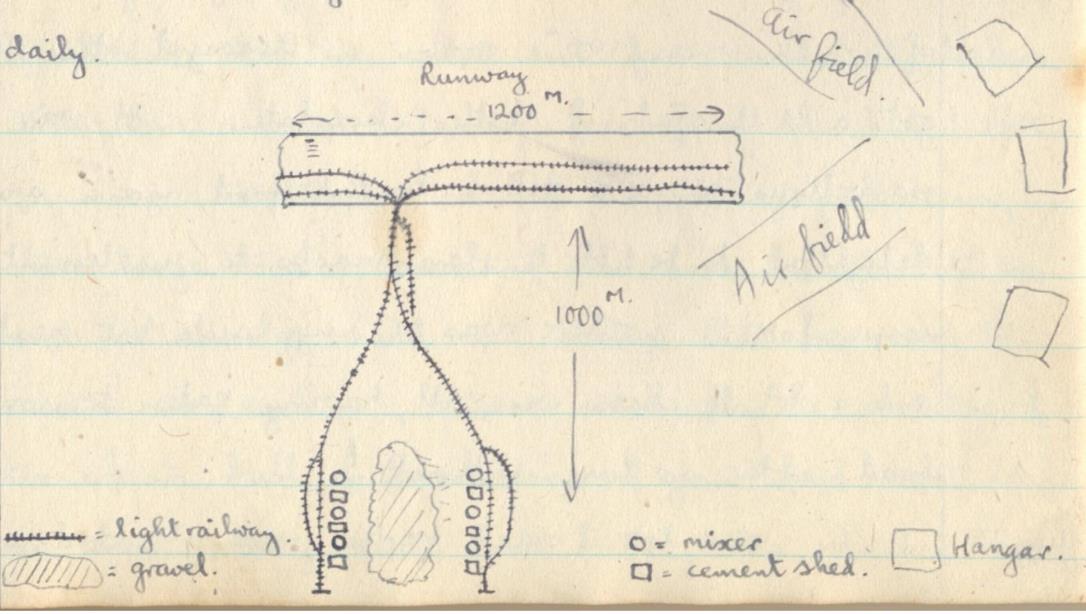
| Zeltweg Airbase, April 1945 | R.M. Lock's sketch of the airfield construction | Modern view of Zeltweg Airbase (Austrian Air Force) |
The majority of Work Camps attached to Stalag XVIIIA were designated 'L' or 'GW' Numbers which had the suffix 'L' (Landwirtschaft) denoted a camp where the work was agricultural in nature, e.g. farm work, forestry. Numbers which had the suffix 'GW' (Gewerbliche Wirtschaft) denoted a camp where the work was 'trade or industry'. There was also a third catagory, 'HV' (Heeresverwaltung (Army Administration)) but there weren't many camps of this type in Austria. In this particular camp, the Luftwaffe were in charge of administration.
Articles 27 to 34 of the Geneva Convention cover labour by prisoners of war. Work must fit the rank and health of the prisoners. The work must not be war-related and must be safe work. Remuneration will be agreed between the belligerents and will belong to the prisoner who carries out the work.
Whilst the definition of 'war-related' work might, in some cases be unclear, working on a Luftwaffe airfield was definitely not allowed under the Convention. However, in the summer of 1941, the POWs had no knowledge of their rights and the Germans were in no hurry to enlighten them. It was only the intervention of the Red Cross that brought this work to a halt and the POWs were moved to other camps. That, however, took several months.
Dvr Reginald Moore kept an extremely detailed diary throughout his time as a POW. The following extract covers his time at Zeltweg.
July 18
On the next day, Friday, reveille was at 5.0 a.m.
when we fetched three cans of milky coffee from the cookhouse. It worked out at
about a pint each. We paraded at 6.0 a.m.
to be split up into parties for the
local contractors engaged on work in and about the aerodrome. Ken and I found
ourselves, together with eighteen others, booked for a firm
called Wurz
(pronounced Veertz) and were marched off by a sentry at about 6.45. We went
through the Luftwaffe barracks and out to the airfield and found our work to be
on
a big hangar under construction. The firm were the general contractors on
the job and the foreman put five of us on to keep a concrete mixer going.
So
work started after many weeks of hunger and inaction, and it came hard to
weakened constitutions and softened hands which soon blistered. We had a break
from 9.0 - 9.15
a.m. but the rest of the morning passed very slowly till 12.0
when we marched back to camp for dinner which was much the same as yesterday’s
tea, except that we also got 1½
ladlefuls of very thin soup with a little
shredded biscuit in it. We soon found that those meals blew us out for a little
while but really did very little to satisfy hunger. The
afternoon passed even
slower; needless to say we took it very easy. It was bad enough to be working
for Jerry in any case and we certainly did not intend to kill ourselves over it.
Most of the civilians on the job were conscripted labour from conquered
territories and were no more enthusiastic over the work than we were; however
fear drove them on to
long hours on poor food. There were also about 12
German Luftwaffe men at work as bricklayers. It struck me that they must be very
short of labour to employ such a mixed
crowd on that kind of work. Some of
the other lads were at work on the steel construction, floor laying, roofing and
other jobs
July 19
On the second day I was switched over to a mortar
mixer and, as it was Saturday, we had the afternoon off which was really
appreciated and put to good use doing odds and ends
for which there was no
time on working days.
July 20
Sunday was spent quietly with only one parade at
10.0 a.m. for the arrival of the Camp Commandant who had been on leave. A
Lieutenant was in charge of the camp but
under him was a Feldwabel (Sergeant)
who did most of the actual work it entailed. Afterwards the bread was dished
out, a loaf between five and the dinner was good. In
the afternoon I had a
lay down till tea-time when some porridge was served (not nearly enough of
course). I went to a service held in the little Hospital at 7.0 p.m. and felt
very
close to those at home; how I wondered about them and hoped they were
not fretting on my account, especially as things were not too tough after all -
if only I could have written
home; however the time would come. I was more
than ever glad that I did not smoke for the chaps could not get cigarettes at
any price and were “dive bombing” for “dog
ends” in the road to and from
work. A heavy thunderstorm developed in the evening and as I lay on my bed
watching the lightning flicker about the hill-top I thought of
another
thunderstorm with a different back-ground, a scene from another world.
July 21
The new week dawned very dull and it rained
slightly all morning but not heavily enough to stop work, so we got unpleasantly
damp instead - a bad thing as we had no other
clothes and no indoor drying
facilities.
July 22
On Tuesday I was put on with the
Luftwaffe bricklayers under the eye of the irate-voiced foreman dubbed “Buffalo
Bill” and Ken and I spent the rest of the week wheeling bricks
from the
stacks to the work, or mortar from the trough by the machine. All that was rough
on the hands, especially the bricks but we had our spells and the Jerries were
quite
friendly. It was amusing to get their angle on the war and they swore
that Moscow would fall in six days! As the scaffolding went up Ken and I went
with it and wheeled
the barrows off the hoist until it broke down. I had
never seen such poor workmanship as that brick-laying but as it was only filling
in work I suppose it didn’t matter a great
deal. Anyway I realised where the
expression “Jerry built” originated! The scaffolding was fairly thrown up too
and before we left the job there were two collapses one of
which nearly broke
the neck of one of our boys when he fell from the top of the building.
July 26
Saturday came at last so completing our first
week’s work but, all said and done, I felt better after it than I had been since
becoming a prisoner of war.
On the previous Thursday, on the pretext of
fetching some salt, I had managed to get in the cookhouse after tea. Whilst
there I quietly started to wash up a pile of big cans and
afterwards swilled
the floor down. For several nights running I repeated the performance and by the
time there was an enquiry made as to what I was doing there the
girls had got
used to me. Also I was pally with the Hut Commander S/M Mitchell and he was
supposed to help in the cookhouse but as he worked in the canteen he gave me
permission to take his place in the cookhouse. Of course that gave me some
authority and I managed to hold the job down. From that time onward Ken and I
were not
hungry for I always managed to bring out enough bread, butter, meat
or soup, after finishing up at night, to fix us up for supper and breakfast next
day. It was hard work
but well worthwhile and I was thankful for the
opportunity.
July 27
The issue teas over the week-end were poor owing
to the fact that the civilian cookhouse staff finished early on Saturday and
Sunday. We had a few ounces of brawn on Saturday
and about 8” of German
sausage on Sunday. There was a loud moan over that and a committee of six was
elected to try and improve rations and to get the camp property
organised.
Personally I did not see that they could do much of use about the food as Jerry
took no notice of anybody. However the least they could do was to issue extra
bread to eat with the meat but they never did. “Back-ups” (i.e. the rationing
out of food left over) came round two or three times a
week as we also got
cans of soup from the Luftwaffe canteen nearly every day. A potatopeeling
fatigue occupied about 40 men each night and they got a good whack of soup
from the cookhouse when they had finished.
July 28
On Monday we went back to our bricklayers
labouring and felt intensely “Mondayish”. However after an easy morning it
rained hard at lunch time so that we could not go back
to work until it eased
off at 3.0 p.m. That helped the afternoon on wonderfully.
July 29
Tuesday was a full day but easy as two of us only
had to keep a solitary bricklayer going who was filling in between roof rafters.
He was making the job last all day so we had
plenty of spells. I became a
proper work dodger in those days - lack of inspiration and the unpleasant
thought of helping Jerry, I suppose.
July 30
It rained again on Wednesday as on Monday and we
had a good dinner consisting of a ladleful of spuds in their jackets, one
ladleful of thick soup, one piece of meat about two
inches square and one and
a half ladlefuls of thin soup. Tea consisted of two ladles of maizemeal cooked
with skim milk. In the evening I worked as usual in the cookhouse
but it was
worthwhile for I was given a large dish of soup with plenty of meat in it, some
lettuce, 4ozs butter and an extra bread ration.
July 31
Thursday saw me working with the gang who were
excavating inside the hangar to level the floor for concreting. We had to dig
out the soil to a depth of nearly eighteen inches
and it was back-aching work
but the old chap working with us did not bother so we took it very easy. The
soil had to be thrown up into trucks and wheeled away along the line to
a tip
outside the building. We were “rained off” for nearly an hour during the
afternoon and for the rest of the day the half finished roof dripped
depressingly. I was feeling
pretty dull and far from home just then.
Aug 2
The foreman changed a few of our jobs on Saturday
and I was pleased to get away from under the still dripping roof. He took me
to a heap of gravel outside, together with a
timid Czech who was scared stiff
of him. Time passed more quickly in the open and I cheered up a bit but being
the alternate Saturday we had to work during the afternoon.
The dinner was
very poor - just a ladle of thin soup followed by a ladle of cabbage soup
with a few spuds in it and a small chunk of meat. It was amazing how they
expected so
much work on such watery food. Luckily Ken and I could re-inforce
it with a couple of good, thick slices of bread and margarine. Very
unwillingly and with many moans we
crawled back to the job by 1.10 p.m. and
instead of the Czech I had an Australian working with me. We got on together
well, loading the truck easily in twenty minutes.
Time passed very quickly in
that fashion for we had a twenty minute spell after each load and the sound
of the whistle at 4.0 p.m. came as a pleasant surprise. Tea was just as poor
as the previous week. There was washing and lots of other odd jobs to do after
tea before getting to bed, very tired, at 8.30 p.m.
Those busy days,
starting at 5.0 a.m. and not finishing till about 9.0 p.m., passed on the
time quickly and it seemed impossible that it was August Bank Holiday on Monday.
I
wondered if my P.O.W. life would be only a memory in a year’s time.
Aug
3
Sunday dawned beautifully fine - the first clear morning for a week. I got
up at 6.0 a.m.instead of the usual 5.0 a.m. to the sound of church bells
floating across the dew-soaked
fields. The drone of the early morning ‘planes
soon dispelled the fleeting illusion of a world at peace. There was a check
parade at 8.0 a.m., the only formality of the day and I
had a quiet morning
in the sunshine, sitting at one of the outdoor tables, just looking through
my photos for the 1000th time and going home with each one. Quite a good
dinner was served at about 12.30 accompanied by the usual cursings on the part
of some of the men. Admittedly things were not perfect and certainly I had no
cause for
complaint but their cursing about everything did no good and much
of it was quite wrong. I got to bed early being very tired and while they
were going in at Punshon I read
some of our lovely hymns. There was no
service in the camp after the first one. An impromptu concert was held
outside in the “garden” from 7.0 p.m. onwards and a
violent thunderstorm set
in at about locking-up time.
Aug 4
I felt good on Monday morning and time
passed well on the same job as Saturday. The hangar on which we were working
was next to one used for engine overhauls and it was
a fairly common
occurrence for an engine to catch fire on being started but the blaze was
always extinguished quickly by means of a large chemical extinguisher that was
brought
out every time an engine was started. We had become accustomed to the
sight of ‘planes taking off and landing. At night there was very often night
flying when all the high
points in and around the ‘drome were illuminated
with red lights. The ‘planes also used their wing and tail lights. We saw
gliders being used and there were one or two crashes
whilst we were there -
we longed to see more.
Aug 5
We were still obliged to go through our
clothing for lice every day and frequently caught up to half a dozen. We were
surprised to see the mountains round about covered with
snow when the low
clouds of the previous day rolled away, and we thought it a bad sign for
winter.
Aug 13
I felt rotten on Thursday and at
lunch-time reported “sick”. During the afternoon I lay on my bed as sick as a
dog with my stomach tasting like an old swill tub, properly twisted
up in
knots. At 7.0 p.m. I saw the English doctor who took my temperature and found it
was about 101°F so he ordered me into the camp hospital or “Krankenrevier”.
Later on
in the evening a German Luftwaffe doctor came in on inspection and
thought I probably had appendicitis. It certainly felt bad enough for
anything but was probably only a chill.
By Saturday I felt better, the rain
had subsided and the temperature dropped to normal but it was nice having a
good rest in bed and the food was a bit more liberal than outside.
We managed
to have coffee or hot milk four times a day and a little oatmeal or maize
porridge after lunch and tea. We also made white cheese from sour milk. Ken came
in
each evening and the time passed easily enough and Tuesday was the first
day that I was allowed up. The English doctor came in morning and evening and
temperatures were
taken just before his visits. Yes, it was a change and
passed another week towards freedom. On Wednesday I was up and visited the
cookhouse to nail my job again
starting from the next evening.
Aug 14
Thursday morning was my last cosy morning in bed but I enjoyed it till 8.0 a.m.
when I got up and hung my bedding in the sunshine. I had some toast before
proceeding to get
my washing done with hot water and the help of a small grey
tablet of “ersatz” soap that we had been issued with about ten days before.
It was practically useless but better than
nothing and we were told that it
would be a monthly issue. A small stick of shaving soap, also issued, would
have to last three months. In each hut we also had a large tin of
inferior
black dubbin for our boots. Toilet rolls were installed in the latrines but only
lasted for one glorious day and we were told there would be no replacements so
grass
and cement bags came into use again!
Aug 15
On Friday I
went back to work and found that the Wurz job had finished. The same party
was working for Landvertshaft Ltd on the flying field itself levelling lorry
loads of
soil over the rough or boggy places. That work gave us a better
opportunity to study the lay out of the aerodrome, when we discovered that
there were about forty training planes
in use, mostly bombers and troop
carriers. The eight hangars (two of them under construction) were grouped
round the field in a semi-circle. There were no technical
buildings with
perhaps the exception of the control tower but the field itself was ideal as
a training ‘drome and as flat as a table between the encircling hills. The first
concrete
runway was in the process of being made with the help of about four
hundred of our party and it was to be 1200 metres long by 80 broad. Our new
job was much easier
giving us a longer dinner hour which enabled us to avoid
the huge queues formed by the arrival of the large parties at noon. It also
finished at 5.30 p.m. which suited my
cookhouse work down to the ground.
During the evening we received our first letter and card to send home. I was
very
pleased to be able to get writing again and draft out 500 words taking
copies for reference, but they seemed to be so very short and inadequate.
Aug 16
We were able to get our first hot shower on Saturday but there was a
bit of a crush as there were only two sprays for six hundred men. The German
latrine was also included
in our compound which gave us twelve closets in
all. Through my being in the cookhouse Ken and I were living almost normally.
Aug 18
On Monday a steam de-lousing apparatus was brought into the camp for a
week and approximately 80 men went through the process daily so I found
myself working for
various firms during the week.
Aug 20
Wednesday
morning was wet once again and in the afternoon our room No. 6 was deloused.
The room and everything in it was washed down with strong Lysol solution.
In
fact it was a thorough “spring clean” and it was amazing the amount of rubbish
that we raked out from under the lockers. From then onwards I was free from
the hated lice.
At tea-time we had the great joy of seeing three large
trailer loads of Red Cross Parcels roll in and we simply could not believe
that we were to receive one each. There were
also a number of tea-chests full
of loose tins of jam and meat loaf. We were working quite late getting them
stacked away into the store room and speculation was rife as to
what they
contained. From the printing on the outside of the box we could see that
there was a tablet of soap in each one - that in itself was very important and
we went to
bed like a lot of kids on Christmas eve that night longing for the
next day with its parcels!
Aug 21
After tea on Thursday room three drew
their parcels. A couple of Luftwaffe corporals opened them but the men had
them otherwise intact. It was nearly dark before my room
went through to
collect their parcels together with two “fifty” tins of Golf Flake
cigarettes. It was just like Christmas with all the chaps in the room opening
parcels the
contents of which were 100% good. Amongst other things I got a
1lb slab of Nestlés chocolate. It was simply marvellous to see a bit of
English food again and it was
delightful to be able to plan snacks to
supplement our issue food. There was a huge sick list next day and a
lot of chaps were ill, having eaten too much good food after so long
without!
Aug 23
We all received a fortnight’s pay at 70 pfennigs a day. That was
another surprise to me as a prisoner of war. It was not civilian money but
special P.O.W.
currency equivalent in value. A canteen was started in the
camp and we could buy beer at 40 pfg a bottle and soft drinks at 25 pfg each.
Also cigarette papers, pencils, note
books and other similar articles were
sold.
Aug 25
A lot of small parties were absorbed into the main party making the
runway and I was one of them. The general contractors for the job were a big
Viennese firm called Pittel
& Brausewetter and employed, at that time about
450 men from our camp. Our 300 of that number worked on the actual runway,
excavating, preparing the bays, laying the
concrete and so on. The other 150
worked the machine section which made the huge amount of concrete required. I
joined the latter party as they started half an hour earlier
in the mornings
and finished correspondingly early at night which suited my job in the
cookhouse. A lorry fetched us every morning at 6.15 a.m. and on the six big
mixers we
used 100 tons of cement daily. It
was a hard monotonous job feeding those roaring machines and for every mixing
(200 odd daily) nine of us had to wheel over a barrowload of gravel from the
heap and tip it in
the hopper. Two other men fed in the cement at the rate of
1½ bags to a mixing. Three twelve truck trains severed each bank of machines
and there was practically always a train
waiting to be loaded. At the end of
each day’s work the firm issued six French cigarettes per man. The weather
was very hot and we sweated copiously.
At about that time the Commandant
issued different colour tags for each party which had to be worn on the left
hand breast pocket. Pittel’s was white, Hall’s red, Michl’s
purple and so on.
Aug 27
A new Lieutenant made life a bit difficult on Wednesday by instituting
a bit of a search for conserve and thorough inspection of billets. He said
that we were only supposed to
have one tin un-opened. It was amazing to see
large quantities of stuff disappearing up the chimney and into the loft! We
really did get our fun in a grim sort of way for one
had to try and be a step
ahead of Jerry all the time. I bet we enjoyed ourselves more than our guards
for the poor old chaps seemed to be always either on camp duty or out with
the various parties hanging about on the jobs - a We go our second issue of
letter cards. The next step that we waited for then was to receive letters
from home.
The new Commandant also made life difficult for us by insisting
that we handed in our boots and trousers at night at lock-up time. It was
supposed to be an extra obstacle to
any “would be” excapees but actually it
was very inconvenient as we had no slippers or pyjamas. However we never did
it for more than a few days at a time.
Aug 28-29
Thursday and Friday were
two hard full days but Ken and I had a fine supper on Friday evening made up
of a tine of sausages, a tin of peas, potatoes and bread and butter
followed
by a tin of rice pudding with plenty of milk and sugar! It was a lovely feed but
I did my best to spoil it by tipping most of it off the stool and on to the
grimy floor under
the bed. We energetically chased the peas around and
rescued the spuds and sausages plus a fair amount of dirt. However we soon
rinsed that off with some cold water but it
wasted all poor old Ken’s careful
heating for at that time there was only one small stove in the whole hut.
Aug 30
We were rained off for the whole day on Saturday but we heard
with consternation that we had to work on Sunday to make up the lost time. We
could not do our washing on
Saturday, it was too wet, so it was a poor
exchange for our usual Sunday free.
Aug 31
When we arrived on the job the
machines did not work as we expected and we were merely put on shovelling the
different kinds of ballast into tidier heaps. IT was a proper
waste time job
and the blessed slave drivers kept us there all day in the cold and damp till
5.0 p.m. What a constant rush life was in those days at Zeltweg.
Sept 1
For the whole of the next week I worked on the machines, loading and pushing
barrows of coarse gravel into the mixers at increasing speed up to 210 a day.
I felt very tired and
the constant roar of the machines made me dream of them
at night. I longed for the release of sleep for just those few hours but the
days ran together with nerve racking
insistency. The issue food definitely
got worse and a bad lot of potatoes went rotten in the cellars. They also put
caraway seeds in all the food, bread, soups, salad, cheese etc.
etc.
During the first week in September the first letters from England
arrived and I was very relieved to hear from chaps that received them that
their people had been informed that
they were prisoners of war towards the
end of July. Somehow I didn’t expect a letter for weeks and even calculated
how many thousands of barrows I would have to push before
I got a chance of a
letter. I am afraid I was very sorry for myself in those days.
Sept 12
An
improvement in food was noticed when the Luftwaffe took over the responsibility
of our food from the civilians who cooked for the whole worker’s colony as
well. A
consignment of Red Cross clothing including battle-dress and boots
arrived during September. The ones most in need got issued with new gear
first and on the second
Sunday of issue I secured new boots and trousers.
I was terribly fed up with the machines and the endless monotony was driving me
nuts.
However, quite suddenly, the miserable old foreman, who just stood
around all day like a vicious version of Hamlet’s ghost, took me away from
the mixers to a pile of sand at the
end of the railway line to load an
occasional sand truck. The relief was intense both physically and mentally
and to my mind was little short of a miracle especially as a day or
two
before the old chap and I swore heartily at each other. I thought he was going
to clout me under the ear then but he only put me on unloading cement lorries
for a day.
When the sand job ran out I did a few other odd jobs like picking
up cement bags that had blown over the air-field. It was very pleasant to
roam far and wide over the sunkissed
grass far, far away in thought with the
roar of the ever present mixers mellowed by distance. At about that time I
had all sorts of wild ideas in mind for making an escape by
‘plane.
Sept 20
From Sept. 20th letters came in every other day and some lads were
lucky enough to get a dozen or more. All the mail came by air. The days
passed on however and there was
none for 3026. “Is there any mail?” “No, not
to-day.” I was put back on the fine mixer and even had a couple of days as
brakeman on one of the concrete trains. Rattling over
the lines from the
mixers to the runway made me dream of the train home. We used to collect
mushrooms on the air-field in the misty mornings for it was
practically dark
when we went to work each day. The days were still warm and sunny though and
was usually working without a shirt by 10.0 a.m.
Eventually I got utterly fed
up with the machine job and changed over to a small party working for Josef
Michl. We started excavating a big hole 15x15x5 yards for an
underground
tank. The time passed slowly but the work was much easier and the advantage
in hours was very noticeable. Also we could be in barracks 7 minutes after
knocking off whereas when on Pittel’s it took fully half an hour to form up and
march in.
Oct 8
Working hours were shorted a little on Oct. 8 to fit in
with the lessening daylight. We started half an hour later in the mornings.
Oct 10
Then without warning, on Friday October 10th, the “griff” came in that
the whole lot of us were returning to Wolfsberg on Sunday owing to the
successful action of the
American Red Cross who had lodged a complaint with
the German High Command regarding the nature of our work. It was good in a
way but I hated changes even though
I had been very fed up at times. I felt
really sorry to leave my cookhouse pals and I believe they were sorry to lose
us in favour of the French who were supposed to be
taking over. They had been
so very kind to me especially and I must have had gallons of milk (to make
delicious cold Ovaltine) and pounds of sugar, besides innumerable feeds
and
much bread. Sophie and I exchanged photos and addresses as souvenirs for she
was always 100% good to me. It was a real pleasure to take in some Red +
stuff to her as a farewell present.
Saturday evening saw me cleaning out
my last boiler there in the cookhouse and I felt quite sad. Then I spent the
rest of the evening packing up and was nearly sick through
eating up all
sorts of odds and ends from various tins. A new lot of Canadian parcels had
just arrived in but we did not receive an issue of them
and they were all
returned to Stalag by lorry and trailer on the same day that we left.
Oct 12
On Sunday reveille was at 3.0 a.m. and by 6.30 a.m. we were marching off to the
station, leaving Zeltweg behind, on the whole, as a pleasant memory.
